Hindusthan Educational Institutions, founded in 1992, offer quality education across diverse fields like engineering, science, arts, and management.
Explore the Deparment of
Artificial Intelligence & Data Science
About Our Department
The Department of Artificial Intelligence and Data Science started in the year 2021 with an intake of 60 and intake increased to 120 in the year 2024 and intake increased to 180 in the year 2026.The Department works with the vision of achieving excellence for providing value-based education in Artificial Intelligence and Data Science through innovation, teamwork and ethical practices. The department is affiliated to Anna University, Chennai for the fulfillment of faculty and laboratory resources. The department continuously updates its curriculum to match emerging technological trends and regularly organizes add-on courses, workshops and seminars. It has established Centers of Excellence in Cloud Management and Data Science & Big Data Analytics in collaboration with VMware and EMC². The department also maintains strong industry partnerships with Oracle, Red Hat. A dedicated team of experienced faculty members with diverse research interests contributes to academic and research excellence.
The Artificial Intelligence and Data Science Program teaches students how to do intelligent data analysis, which is a critical component in many real-world applications. Data science has evolved as one of the most high-growth, dynamic, and profitable jobs in technology during the last 10 years.
This course intends to provide not only basic technologies like artificial intelligence, data mining, and data modelling, but also extensive inputs in machine learning and big data analytics. Students will gain cross-disciplinary skills in fields such as statistics, computer science, machine learning, and logic, as well as data scientists, and may have career opportunities in healthcare, business, eCommerce, social networking companies, climatology, biotechnology, genetics, and other important areas as a result of taking this course.
The primary goal of this curriculum is to provide students with abilities in statistical reasoning, mathematical reasoning, machine learning, knowledge discovery, and visualisation.
Vision and Mission
“To be a center of excellence in Artificial Intelligence and Data Science, fostering innovation and developing ethical, sustainable solutions for global challenges.”
MD1:Impart a strong foundation in AI, Data Science and emerging technologies through quality education and experiential learning.
MD2:Promote innovation, research and design thinking for solving real-world problems.
MD3:Instill ethics, sustainability and industry collaboration for developing competent professionals and leaders
PSOs, PEOs & POs
PEO 1: Excel in cutting edge technologies of Artificial Intelligence, Data Science and computing to develop intelligent solutions for real-world problems.
PEO 2:Build a successful career in industry, pursue higher education or demonstrate entrepreneurial competence in emerging technological domains.
PEO 3:Exhibit professional ethics, effective teamwork and social responsibility, contributing to the advancement of society through their professional practices
PSO 1:Apply programming, problem-solving and hardware integration skills to design intelligent, secure, and efficient systems using AI and Data Science techniques.
PSO 2:Design and develop AI and Data Science models using machine learning, deep learning and data analytics techniques for solving complex problems.
At the time of graduation, the students of Computer Science and Engineering should have the
PO 1: ENGINEERING KNOWLEDGE : Apply knowledge of mathematics, natural science, computing, engineering fundamentals and an engineering specialization applicable to computer science and engineering discipline to develop to the solution of complex engineering problems.
PO 2: PROBLEM ANALYSIS : Identify, formulate, review research literature and analyze complex engineering problems reaching substantiated conclusions with consideration for sustainable development.
PO 3:DESIGN /DEVELOPMENT OF SOLUTIONS : Design creative solutions for complex engineering problems and design/develop systems/components/processes to meet identified needs with consideration for the public health and safety, whole-life cost, net zero carbon, culture, society and environment as required.
PO 4: CONDUCT INVESTIGATION OF COMPLEX PROBLEMS : Conduct investigations of complex engineering problems using research-based knowledge including design of experiments, analysis & interpretation of data to provide valid conclusions.
PO 5: ENGINEERING TOOL USAGE : Create, select and apply appropriate techniques, resources and modern engineering & IT tools, including prediction & modeling to recognize their limitations to solve complex engineering problems.
PO 6: THE ENGINEER AND THE WORLD : Analyze and evaluate societal and environmental aspects while solving complex engineering problems for sustainability with reference to economy, health, safety, legal framework, culture and ethics.
PO 7: ETHICS : Apply ethical principles and commit to professional ethics, human values, diversity and inclusion; adhere to national & international laws.
PO 8: INDIVIDUAL AND COLLABORATIVE TEAM WORK : Function effectively as an individual, and as a member or leader in diverse/multi-disciplinary teams.
PO 9: COMMUNICATION : Communicate effectively and inclusively within the engineering community and society at large, such as being able to comprehend and write effective reports and design documentation, make effective presentations considering cultural, language, and learning differences.
PO 10: PROJECT MANAGEMENT AND FINANCE : Apply knowledge and understanding of engineering management principles and economic decision-making and apply these to one's own work, as a member and leader in a team, and to manage projects and in multidisciplinary environments.
PO 11: LIFE LONG LEARNING : Recognize the need for, and have the preparation and ability for i) Independent and life-long learning ii) adaptability to new and emerging technologies and iii)critical thinking in the broadest context of technological change.
PO 6: THE ENGINEER AND THE WORLD : Analyze and evaluate societal and environmental aspects while solving complex engineering problems for sustainability with reference to economy, health, safety, legal framework, culture and ethics.
PO 7: ETHICS : Apply ethical principles and commit to professional ethics, human values, diversity and inclusion; adhere to national & international laws.
PO 8: INDIVIDUAL AND COLLABORATIVE TEAM WORK : Function effectively as an individual, and as a member or leader in diverse/multi-disciplinary teams.
PO 9: COMMUNICATION : Communicate effectively and inclusively within the engineering community and society at large, such as being able to comprehend and write effective reports and design documentation, make effective presentations considering cultural, language, and learning differences.
PO 10: PROJECT MANAGEMENT AND FINANCE : Apply knowledge and understanding of engineering management principles and economic decision-making and apply these to one's own work, as a member and leader in a team, and to manage projects and in multidisciplinary environments.
PO 11: LIFE LONG LEARNING : Recognize the need for, and have the preparation and ability
for
i) Independent and life-long learning
ii) adaptability to new and emerging
technologies and
iii)critical thinking in the broadest context of technological change.
Training and Placement Recruiters








Meet Our Esteemed Faculty
Loading...
View
All Faculty
Laboratories
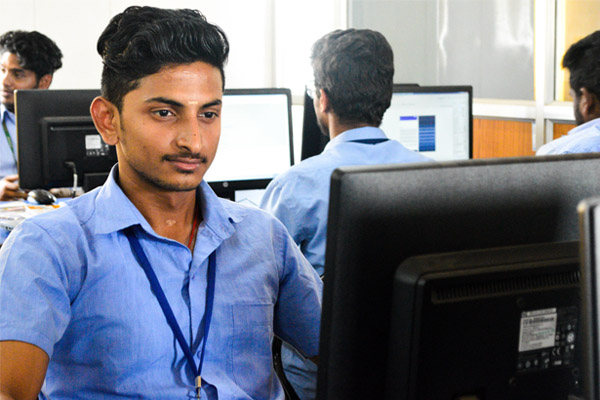
Machine Learning Laboratory
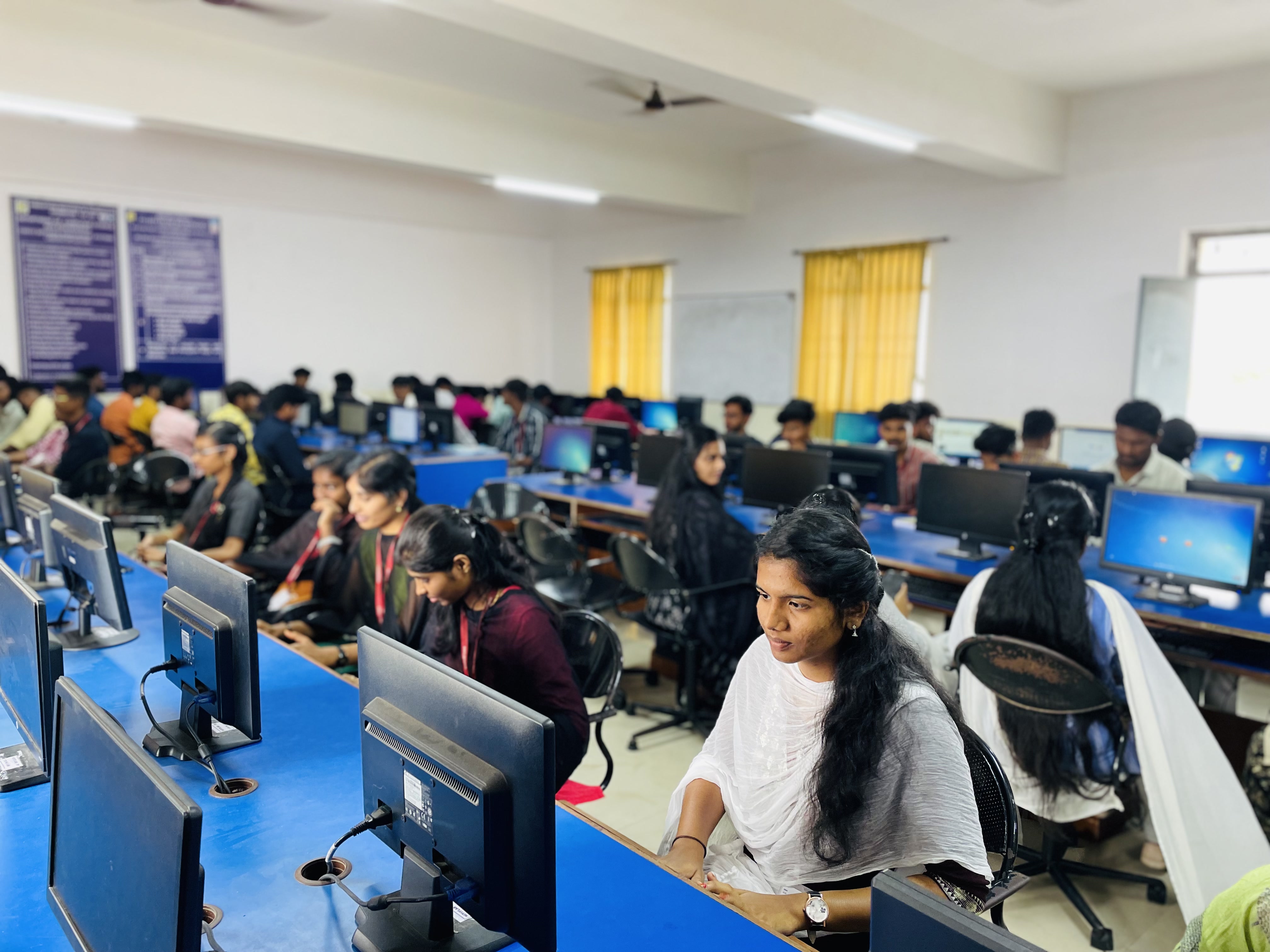
The Machine Learning Laboratory is designed to provide students with practical exposure to machine learning concepts through hands-on experiments and programming exercises. Students learn to collect, preprocess, visualize, and analyze data, and implement various machine learning algorithms for classification, regression, clustering, and prediction tasks using Python and relevant libraries. The laboratory enables learners to gain experience in model development, training, testing, performance evaluation, and result interpretation. Through real-world datasets, case studies, and mini-projects, students develop problem-solving skills and the ability to build intelligent data-driven solutions for diverse application domains.
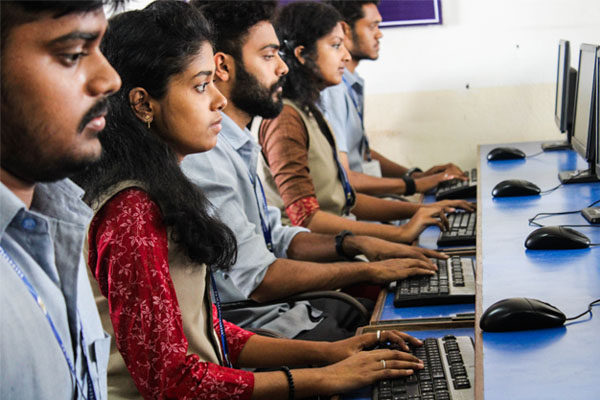
Database Management Systems Laboratory
The Database Management Systems Laboratory for Artificial Intelligence and Data Science (AIDS) provides practical exposure to database design, implementation, and management using relational database systems. Students learn to create and manipulate databases, design entity-relationship models, normalize data, and perform data retrieval and modification using SQL queries. The laboratory emphasizes hands-on experience in implementing constraints, joins, views, stored procedures, and database transactions to ensure data integrity and efficiency. Through real-world datasets and application-oriented exercises, students develop the skills required to manage, organize, and analyze large volumes of data, forming a strong foundation for advanced studies in artificial intelligence, data science, and data analytics.
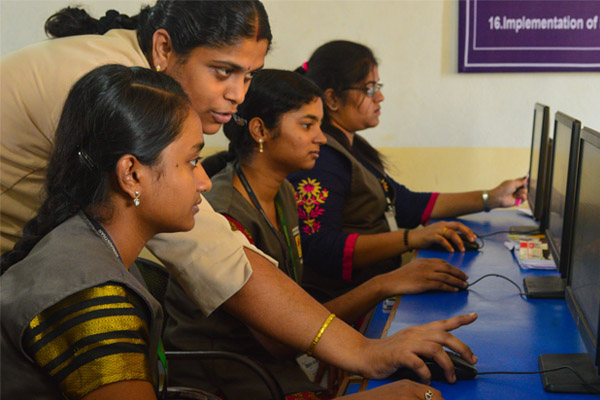
Data Science Laboratory
The Data Science Laboratory provides hands-on training in data collection, preprocessing, analysis, visualization, and interpretation using modern data science tools and techniques. Students gain practical experience in handling structured and unstructured datasets, performing exploratory data analysis, applying statistical methods, and developing data-driven solutions using programming languages and libraries such as Python, NumPy, Pandas, and Matplotlib. The laboratory emphasizes real-world problem solving through data cleaning, transformation, visualization, and predictive analytics, enabling students to extract meaningful insights and support informed decision-making across various application domains.
Computer Networks Laboratory
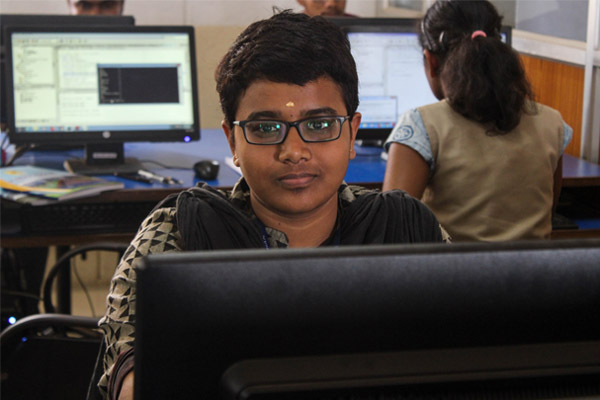
The Computer Networks Laboratory provides practical knowledge of network fundamentals, communication protocols, and network configuration through hands-on experiments and simulations. Students gain experience in designing, implementing, and analyzing computer networks using networking tools and simulators. The laboratory covers IP addressing, subnetting, routing, switching, network troubleshooting, socket programming, and the implementation of various network protocols. Through practical exercises, students learn to monitor network performance, ensure reliable data transmission, and understand network security concepts, thereby developing the skills required to design and manage modern communication networks effectively.
The Project Laboratory
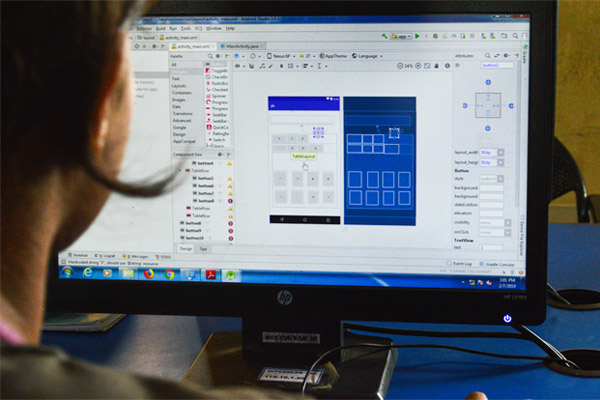
The Project Laboratory offers the students, the opportunity to gain valuable hands-on experience on modern IT Tools and to provide solutions to the societal problems by developing new products. Student researches are carried out in this laboratory. This lab is equipped with high end systems and software like Hadoop, Weka, Globus Toolkit, YARN, R Package, Hbase, MongoDB, Android Studio, etc. This laboratory is provided with 24*7 internet connectivity.
Collaboration & MoU

-
Academic partner of Google for education with Google tools and resources
help teachers and students create, collaborate, and build digital skills
for the future.
Read More

Zoho
-
Academic partner for training and internships in Application Developmen
Read More

Infosys
-
Training in technology and curated content to address reskilling of
unemployed in tech.
Read More
IBM
-
Curriculum integration and Delivery in the field of Artificial
Intelligence and Data Sciences
Read More

Oracle
-
Oracle Academy membership provides resources they need to help educators
develop core computing knowledge and skills aligned to industry
standards and using current technologies in Database, Cloud and Server
management
Read More

Dell
-
Dell EMC center of excellence in Data Science and Big Data Analytics.
Read More

Salesforce
-
Training partner for CRM Integrated platform using AI, app development.
Read More

RedHat
-
Redhat Academy alliance offers curriculum in Linux, cloud, and
development technologies and international certification.
Read More

UiPath
-
Center of Excellence in Robotic Process Automation
Read More

Nasscom
-
It seeks to propel India to become a global hub of talent in emerging
technologies.
Read More

CSS Corp
-
Employability skills training and technology and soft skills
Read More
OBE Practices
Outcome Based Education (OBE) is a student-centric instruction model that focuses on measuring student performance through outcomes. Our department follows rigorous OBE practices to ensure that students acquire the necessary skills and competencies by the end of their program.
Through continuous assessment, feedback, and improvement, we align our teaching methodologies with global educational standards, fostering a culture of academic rigor and professional readiness.
Research and Development
Overview
The Research and Development Cell aims to nurture research culture in the College by promoting research in newly emerging and challenging areas of Engineering, Technology, Science and Humanities. It encourages the students and faculty to undertake the research in newly emerging frontier areas of Engineering, Technology, Science and Humanities including multidisciplinary fields. This enhances the general research capability of budding technocrats by way of participating in conferences, seminars, workshops, project competition, etc.
Our Objectives
- To create awareness and opportunities in Research and Development among the students & faculty and to create Research and Development atmosphere in every department.
- To create interest and atmosphere among the staff members to take up Research projects and improve their knowledge, skills and qualifications by registering Ph. D's.
- To motivate the faculty members of the group for R&D activities in the area of their specialization.
- To encourage staff members and students to publish technical papers for publishing in National and reputed International Conferences/Journals.
Professional Society


Outcome Based Education (OBE) Practices
The department has adapted Outcome Based Education practices in restructuring of curriculum, pedagogy and assessment practices to reflect the achievement of high-order learning. OBE empowers students to choose what they would like to study and how they would like to study it. Not only does it adapt to a learner's strengths and weaknesses, but it also provides sufficient time to attain proficiency and fluency in the subject matter.
Gallery
Hindusthan Institute of Technology, Valley Campus, Pollachi Highway, Coimbatore - 641 032. TamilNadu, INDIA
+91 9047010006For General
Enquiry
Email:hit.office@hindusthanuniv.in
Design & Developed by NovaCodex ( HICAS - IT Alumni )
Copyright© Hindusthan.net, All rights reserved.